
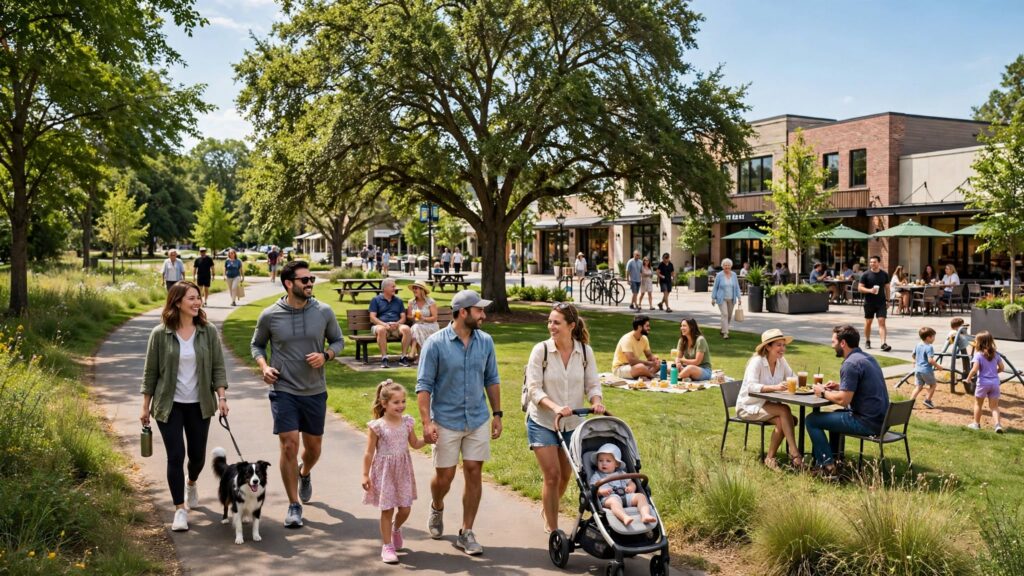
What Makes a Lexington Neighborhood Feel Like Home?
When buyers start their home search, most focus on the obvious things.
Square footage.
Bedrooms.
Bathrooms.
Updated kitchens.
Large backyards.
While these factors certainly matter, something interesting often happens after move-in day.
Six months later, homeowners rarely talk about the countertop material or paint color.
Instead, they talk about the neighborhood.
The coffee shop they visit every Saturday morning.
The walking path they use after dinner.
The local park where their children play.
The convenience of nearby services.
The neighbors who made them feel welcome.
The truth is that a home’s value goes beyond the property itself. The experience of living in a neighborhood often determines long-term satisfaction.
For anyone moving to Lexington KY, understanding what creates a sense of community can be just as important as finding the right house.
Why Neighborhood Matters More Than Many Buyers Realize
A home can be beautiful.
A neighborhood can make it unforgettable.
When buyers imagine their future, they’re rarely picturing themselves sitting in an empty living room.
They’re imagining daily life.
They imagine:
- Morning routines
- Weekend activities
- School drop-offs
- Evening walks
- Community events
- Dining and entertainment options
These experiences shape how connected people feel to where they live.
A great neighborhood supports the lifestyle homeowners want to build.
The Power of Daily Convenience
One of the biggest contributors to homeowner satisfaction is convenience.
Small daily tasks become easier when important destinations are close by.
Homeowners often appreciate:
- Grocery stores nearby
- Healthcare facilities
- Fitness centers
- Restaurants
- Coffee shops
- Retail districts
- Banking services
What seems like a minor convenience at first can have a major impact on quality of life over time.
Many buyers discover that reducing driving time improves their overall satisfaction with a location.
Local Parks Create Community Connection
Parks provide much more than green space.
Throughout Lexington, parks often become gathering places where community relationships develop naturally.
Residents use parks for:
- Walking
- Jogging
- Sports activities
- Family outings
- Social gatherings
- Outdoor recreation
Access to well-maintained park systems often increases both neighborhood appeal and homeowner satisfaction.
For many buyers, nearby recreational opportunities become an important lifestyle factor.
Community Gathering Spaces Matter
Strong neighborhoods often create opportunities for interaction.
Community gathering spaces help transform a collection of houses into a true neighborhood.
Examples include:
- Public plazas
- Farmers markets
- Community centers
- Outdoor events
- Seasonal celebrations
- Local festivals
These shared experiences help residents build a stronger connection to where they live.
Buyers who value community engagement often prioritize neighborhoods with active gathering spaces.
Walkability Is Becoming More Important
Many modern buyers place greater importance on walkability than previous generations.
The ability to safely walk to:
- Restaurants
- Entertainment
- Parks
- Shops
- Community events
creates a lifestyle many buyers find attractive.
While not every Lexington neighborhood offers the same level of walkability, buyers increasingly consider how their surroundings support daily activities.
Retail Districts Shape the Lifestyle Experience
Retail areas contribute to more than shopping convenience.
They often influence how residents spend their time and interact with their community.
Popular retail districts frequently become:
- Social destinations
- Dining hubs
- Entertainment centers
- Gathering places
Having access to these amenities can significantly influence how homeowners feel about their location.
Recreation Areas Improve Quality of Life
The best neighborhoods support a variety of lifestyle preferences.
Some homeowners value:
- Bike trails
- Walking paths
- Sports facilities
- Dog parks
- Nature areas
Others prioritize shopping and entertainment.
The key is finding a location that aligns with your personal priorities.
The most desirable neighborhood isn’t necessarily the same for every buyer.
Why Some Neighborhoods Generate More Demand
One of the most common questions buyers ask is why certain areas consistently attract more interest.
The answer often comes down to community identity.
Neighborhoods that create strong emotional connections tend to generate stronger demand.
Factors often include:
- Convenience
- Amenities
- Beauty
- Safety perceptions
- Lifestyle opportunities
- Sense of belonging
Buyers don’t simply evaluate houses.
They evaluate how they imagine their future life within the community.
Why Buyers Should Visit Multiple Times
One of the best ways to evaluate a neighborhood is to experience it at different times.
A community may feel very different:
- Morning vs. evening
- Weekday vs. weekend
- School season vs. summer
Visiting multiple times helps buyers better understand traffic, activity levels, and overall atmosphere.
This additional perspective can prevent surprises after moving in.
My Personal Perspective
One thing I’ve noticed after helping buyers throughout Lexington is that their most positive memories rarely start with the house itself.
They start with experiences.
The restaurant they discovered nearby.
The park they visit regularly.
The walking trail they enjoy every evening.
The neighborhood event where they met new friends.
The homes people love most are often located in communities that support their everyday lifestyle.
That’s why I encourage buyers to spend as much time evaluating neighborhoods as they do evaluating properties.
The house is important.
But the lifestyle around it often becomes what truly feels like home.
The Bottom Line
A house becomes a home through everyday experiences.
Neighborhood culture, local amenities, parks, retail districts, recreation areas, and convenience all contribute to how connected homeowners feel to a community.
When buying a home in Lexington, don’t focus exclusively on the property.
Take time to evaluate the neighborhood itself.
Because years after moving in, what you’ll remember most may not be the house.
It may be the life you built around it.
❓ Expanded FAQs
How important is neighborhood culture?
Many buyers rank community feel as one of the most important factors influencing long-term satisfaction.
Should buyers visit a neighborhood multiple times?
Yes. Visiting at different times of day and different days of the week provides valuable perspective.
What local amenities improve quality of life?
Parks, shopping, healthcare, restaurants, recreation facilities, and community gathering spaces all contribute to convenience and satisfaction.
Why do some neighborhoods have stronger demand?
Community identity, lifestyle opportunities, convenience, and local amenities often increase buyer interest.
Do parks affect home values?
Parks and recreational areas often contribute positively to neighborhood desirability.
Is walkability important in Lexington?
Many buyers increasingly value walkability because it supports convenience and daily lifestyle needs.
Should buyers focus more on the house or the neighborhood?
Both matter, but neighborhood satisfaction often has a greater long-term impact on happiness.
What makes homeowners feel connected to a community?
Shared experiences, local events, gathering spaces, neighborhood amenities, and everyday convenience often create a stronger sense of belonging.
