
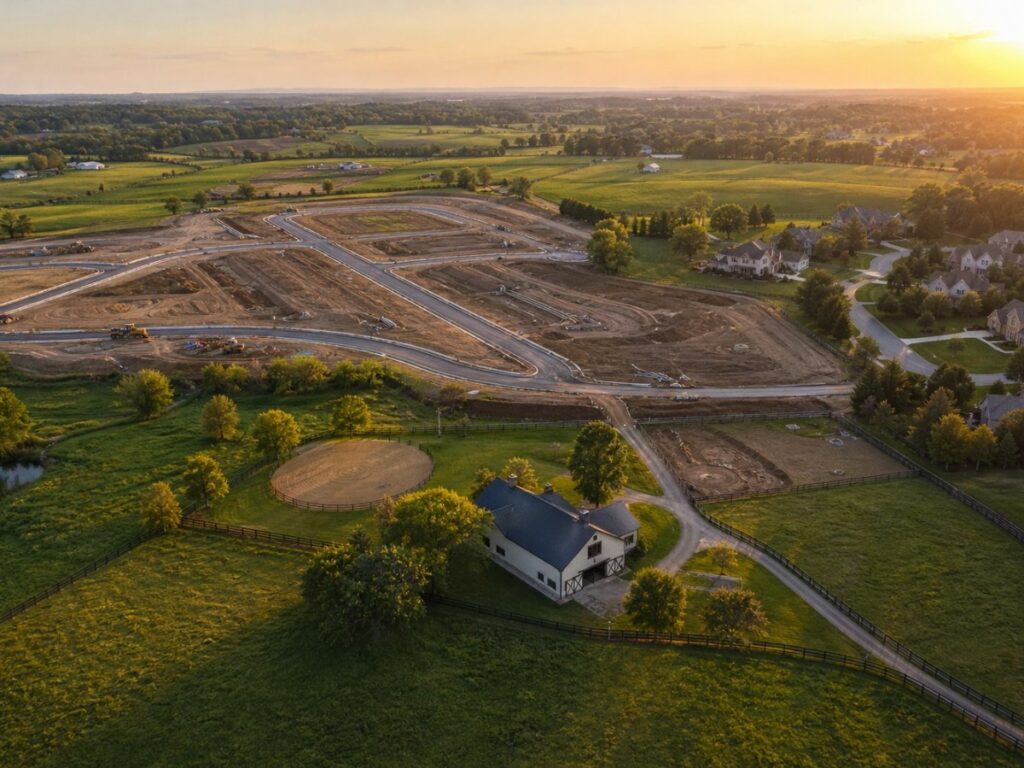
Start with how the land works, not how it looks. Walk the pasture, every gate, the water source, and the barn, then get written confirmation that zoning allows your exact use and time the real drive to your vet and farrier. If records are missing, budget for independent evaluations before you offer.
What should buyers check before buying a Central Kentucky horse property?
Before buying a Central Kentucky horse property, check the pasture, fencing, water supply, barn, zoning, and the real travel time to vets and farriers, not just the recorded acreage. Steep, wooded, or poorly drained ground gives you less usable horse land than the deed suggests. Ask for soil tests, repair and water-system records, and confirm in writing that your intended use is allowed.
Key Takeaways
- Recent local market data shows Lexington homes of all types sold August–October 2026 had a median sale price of $363,497 and a median of 14 days from listing to going under contract, but a farm with acreage and a barn is priced on its land and improvements, so treat that figure as backdrop only.
- Usable acreage, not recorded acreage, is what matters: steep, wooded, poorly drained, or equipment-inaccessible ground can shrink your real horse area.
- University of Kentucky guidance identifies gates, fence lines, waterers, and hay feeders as the hardest places to maintain, so inspect every gate and fence corner, not just the perimeter.
- Lexington-Fayette’s Agricultural Rural zone allows ordinary agricultural and equine-related uses, but boarding, lessons, training, events, or a horse hospital may need conditional-use approval, so get written confirmation before you rely on the property for income.
- Ask for records (soil tests, fence repairs, well or water-system maintenance, septic, barn electrical work) and budget for independent evaluation wherever the records don’t exist.
Rolling pasture and a long plank fence photograph beautifully. They can also hide the things that cost you money after closing. When I walk buyers through a Central Kentucky horse property, we review it by operating system instead of by acreage: pasture, fencing, water, barn, access, storage, and waste management. That’s how you compare two farms fairly, even when one is far prettier than the other.
How do you judge pasture, fencing, and water before you offer?
Judge them by how they work for horses day to day, not by how they look from the driveway. A pasture that is green in May can still be a mud lot in February, and a fence that looks fine from the road can have a failing corner you only find on foot.
How much of the acreage can a horse actually use?
Usable acreage is often smaller than recorded acreage. Ground that is steep, wooded, poorly drained, cut off from equipment, or divided by unsuitable fencing doesn’t give you the same horse area the listing number implies. Walk the whole property, not just the part near the barn.
Pasture quality matters as much as size. The University of Kentucky’s Horse Pasture Evaluation Program offers comprehensive evaluations, including tall-fescue analysis, so you can assess a pasture instead of guessing from acreage. UK’s horse pasture guidance also points to grazing plans, paddock design, parasite control, soil testing, fertilization, and weed management. So ask the seller for recent soil-test results and any record of pasture renovation, fertilizer, weed control, and grazing practices.
Are the fences and gates safe and practical?
Inspect every gate and every fence corner. The Kentucky Equine Health and Welfare Council recommends regular fence inspection so horses stay contained, particularly where an escape could put them on a road, and it flags hazards like sharp objects, holes, and farm equipment left in pastures. UK’s pasture guidance singles out gates, fence lines, waterers, and hay feeders as high-traffic spots that are especially hard to maintain.
Look for:
- Leaning posts, exposed wire, and damaged boards
- Sharp hardware or protruding fasteners
- Mud, standing water, or worn footing at gates and gathering points
- Gates too narrow for a tractor or a hay delivery
- Debris, holes, or old equipment in the fields and around outbuildings
Does every turnout have reliable water?
Confirm how water reaches each turnout. The same Kentucky council says horses should have access to a sufficient supply of clean water, preferably from a continuous free-choice source. Ask whether the source is a well, public supply, spring, pond, creek, or automatic system, and then ask:
- Do troughs freeze or lose pressure in cold weather?
- Where are the shutoffs?
- Can the system serve horses in every paddock?
Don’t automatically count a creek or pond as a plus. Kentucky’s environmental best-management guidance for horse farms discusses managed stream crossings, stabilized areas around waterers and feeding points, and alternatives to letting horses stand in streams. Look at bank damage and erosion before you assume natural water is an asset.
Also ask about winter. UK Cooperative Extension’s guidance on using dry lots describes them as fenced areas that can provide year-round access to water and supplements and serve as confined feeding areas in winter and early spring. A usable dry lot or stabilized heavy-use area can protect your main pastures when the ground is wet.
Quick reference: what to look at and what to ask
| System | What to look for | What to ask the seller |
|---|---|---|
| Pasture | Drainage, weeds, bare spots, tall fescue, steep or wooded ground | Soil tests and fertilizer or weed-control history |
| Fencing and gates | Leaning posts, exposed wire, sharp hardware, tractor access | Repair history and replacement dates |
| Water | Source, freeze protection, shutoffs, coverage in every paddock | Well or water-system maintenance records |
| Barn | Ventilation, roof and gutters, electrical, aisle width, fire access | Electrical work, roof repairs, past storm damage |
| Access and storage | Truck and trailer reach, hay and tack storage, wash area | Where hay is sourced and stored |
| Waste management | Manure storage location, runoff paths, heavy-use areas | How manure is handled and where it goes |
Is the barn usable, and does zoning allow your plans?
Treat the barn as a working facility, and confirm zoning for your exact use before you rely on either one. A beautiful barn that can’t legally host your plans, or can’t be reached by a truck and trailer, is a bad fit no matter how it looks.
What should you inspect in a horse barn?
Go through it like a building you’d have to run every day:
- Stall dimensions, doors, and condition
- Ventilation, lighting, and electrical service
- Roof and gutter performance
- Aisle width and fire access
- Hay storage, tack storage, and wash areas
- Drainage around the building
- Whether a truck or trailer can reach it
If you plan to expand, confirm the site access and zoning will support it.
Does Lexington-Fayette zoning allow horses and equestrian businesses?
In many cases yes for ordinary equine use, but it depends on what you plan to do. The Lexington-Fayette County zoning ordinance permits land used solely for agricultural purposes, including equine-related activities, in the Agricultural Rural (A-R) zone, and accessory agricultural uses can include stables and other agricultural structures. Certain horse-riding, training, racetrack, and large-animal-hospital uses may require conditional-use approval.
If you’re thinking about boarding, lessons, training, events, or any commercial activity, get written confirmation from the local planning authority before you count on the property for that purpose. If the farm sits outside Fayette County, the rules come from the county or city where it’s located, so verify the parcel’s zoning classification there. I also like to have a real estate attorney review title, easements, and road access on any acreage purchase.
What does a horse farm cost to maintain, and how close is the help?
Expect fencing, pasture care, barn upkeep, and manure management to be ongoing costs, and what they run depends on the condition of what’s already there. The price you agree to is only the first number on a farm, so get records and independent evaluations before you treat any facility as an advantage.
What records should you ask for?
Ask for pasture soil tests, fertilizer and herbicide applications, hay-production history, fence repairs, well or water-system maintenance, septic records, barn electrical work, and any past storm or flooding problems. Where records don’t exist, budget for an independent look at the pasture, water system, structures, and drainage.
Keep cost-share programs in perspective too. UK Extension’s cost-share overview for Kentucky horse farms (April 2026) lists fencing, heavy-use areas, pasture renovation, water systems, and hay storage as common improvements that may qualify. That doesn’t mean a particular property or buyer is eligible. Verify current eligibility, deadlines, and obligations with the program administrator before you assign any value to a possible reimbursement.
How far are the vet, farrier, and feed supplier?
Measure real drive time, not straight-line distance, to equine veterinary care, emergency veterinary services, farriers, feed and bedding suppliers, hay sources, and any boarding or training facility you’d use. Check the trailer routes too. In Central Kentucky, a farm’s location relative to Lexington and the surrounding horse-farm areas can affect both convenience and how easily you can get regular service.
What does the broader market look like?
For context only, recent local market data shows single-family, condo, and other home types in Lexington (within city limits) sold August–October 2026 at a median of $363,497, up 3.9% from $350,000 in the same window a year earlier. The median time from listing to going under contract was 14 days, and homes sold at an average of 98.1% of list price. Those figures cover all home types, so a working farm with acreage, fencing, and a barn will price on its own terms, and an individual property’s value depends on condition, location, and timing.
| Area | Median Sale Price | Homes Sold |
|---|---|---|
| Lexington | $363,497 | 917 |
| Winchester | $241,832 | 54 |
| Georgetown | $349,657 | 167 |
| Versailles | $357,966 | 42 |
| Nicholasville | $331,970 | 147 |
| Richmond | $294,795 | 103 |
| Paris | $290,798 | 40 |
When you’re ready to write an offer, I’ll walk you through how to offer on a Lexington home without overpaying. It also helps to know how much cash you’ll need to buy a house in Lexington, since a farm often brings extra upfront needs. And once you’re under contract, here’s what happens after your offer is accepted.
FAQ
How much usable pasture do I need for horses in Central Kentucky?
There’s no single number, because it depends on pasture quality, how many horses you keep, your rotation plan, and whether you have a dry lot. A pasture with weeds, bare spots, or poor drainage supports fewer horses than the same acreage in good condition. UK’s Horse Pasture Evaluation Program can help you assess a specific pasture instead of guessing from acreage.
What should I look for when inspecting a horse barn in Lexington?
Check stall size and condition, ventilation, roof and gutters, electrical service, lighting, aisle width, fire access, hay and tack storage, and drainage. Also confirm a truck or trailer can reach the building. Ask for records of any electrical work or roof repairs.
Does Lexington-Fayette zoning allow horses and equestrian businesses on rural property?
Ordinary agricultural and equine-related uses are generally allowed in the Agricultural Rural zone, but commercial uses like training, events, or a horse hospital can require conditional-use approval. The Lexington-Fayette zoning ordinance sets out the rules. Get written confirmation from the local planning authority for your specific use before you buy.
How can I tell whether a horse property has adequate water access?
Find out how water reaches every turnout and whether it keeps working in winter. Ask about the source, freeze protection, shutoff locations, and whether the system serves each paddock. If the farm relies on a creek or pond, look at bank erosion and crossings, which Kentucky’s horse-farm environmental guidance addresses directly.
What maintenance costs should I expect for fencing, pastures, barns, and manure management?
These are ongoing costs, and the amount depends on the age and condition of what’s there, so I won’t put a number on them here. Ask for repair and maintenance records, and budget for independent evaluation where records are missing. Some improvements may qualify for cost-share, so check the UK Extension cost-share publication and verify eligibility before counting on reimbursement.
A Central Kentucky horse property rewards the buyer who reviews it system by system: usable pasture, safe fencing, reliable water, a working barn, the right zoning, and services within a sensible drive. If you’re comparing farms and want a second set of eyes on the details, I’ll help you sort out which questions to ask and which records to request before you make an offer. Schedule a consultation with me and we’ll build your checklist around the properties you’re actually considering.
About Carlos Elliott
Carlos Elliott is a top 1% REALTOR® with Tru Life Real Estate serving Lexington and Central Kentucky, where he has closed 221+ transactions and earned 123+ five-star reviews. Bilingual in English and Spanish, he helps buyers, sellers, and investors move with honest advice and deep local market knowledge.
Tru Life Real Estate · (859) 361-2709
Equal Housing Opportunity. Real estate licensees in Kentucky are regulated by the Kentucky Real Estate Commission. This article is general information, not legal, tax, or financial advice; confirm your own numbers and details with your real estate attorney, tax advisor, or lender.
Start with how the land works, not how it looks. Walk the pasture, every gate, the water source, and the barn, then get written confirmation that zoning allows your exact use and time the real drive to your vet and farrier. If records are missing, budget for independent evaluations before you offer.
What should buyers check before buying a Central Kentucky horse property?
Before buying a Central Kentucky horse property, check the pasture, fencing, water supply, barn, zoning, and the real travel time to vets and farriers, not just the recorded acreage. Steep, wooded, or poorly drained ground gives you less usable horse land than the deed suggests. Ask for soil tests, repair and water-system records, and confirm in writing that your intended use is allowed.
Key Takeaways
- Recent local market data shows Lexington homes of all types sold August–October 2026 had a median sale price of $363,497 and a median of 14 days from listing to going under contract, but a farm with acreage and a barn is priced on its land and improvements, so treat that figure as backdrop only.
- Usable acreage, not recorded acreage, is what matters: steep, wooded, poorly drained, or equipment-inaccessible ground can shrink your real horse area.
- University of Kentucky guidance identifies gates, fence lines, waterers, and hay feeders as the hardest places to maintain, so inspect every gate and fence corner, not just the perimeter.
- Lexington-Fayette’s Agricultural Rural zone allows ordinary agricultural and equine-related uses, but boarding, lessons, training, events, or a horse hospital may need conditional-use approval, so get written confirmation before you rely on the property for income.
- Ask for records (soil tests, fence repairs, well or water-system maintenance, septic, barn electrical work) and budget for independent evaluation wherever the records don’t exist.
Rolling pasture and a long plank fence photograph beautifully. They can also hide the things that cost you money after closing. When I walk buyers through a Central Kentucky horse property, we review it by operating system instead of by acreage: pasture, fencing, water, barn, access, storage, and waste management. That’s how you compare two farms fairly, even when one is far prettier than the other.
How do you judge pasture, fencing, and water before you offer?
Judge them by how they work for horses day to day, not by how they look from the driveway. A pasture that is green in May can still be a mud lot in February, and a fence that looks fine from the road can have a failing corner you only find on foot.
How much of the acreage can a horse actually use?
Usable acreage is often smaller than recorded acreage. Ground that is steep, wooded, poorly drained, cut off from equipment, or divided by unsuitable fencing doesn’t give you the same horse area the listing number implies. Walk the whole property, not just the part near the barn.
Pasture quality matters as much as size. The University of Kentucky’s Horse Pasture Evaluation Program offers comprehensive evaluations, including tall-fescue analysis, so you can assess a pasture instead of guessing from acreage. UK’s horse pasture guidance also points to grazing plans, paddock design, parasite control, soil testing, fertilization, and weed management. So ask the seller for recent soil-test results and any record of pasture renovation, fertilizer, weed control, and grazing practices.
Are the fences and gates safe and practical?
Inspect every gate and every fence corner. The Kentucky Equine Health and Welfare Council recommends regular fence inspection so horses stay contained, particularly where an escape could put them on a road, and it flags hazards like sharp objects, holes, and farm equipment left in pastures. UK’s pasture guidance singles out gates, fence lines, waterers, and hay feeders as high-traffic spots that are especially hard to maintain.
Look for:
- Leaning posts, exposed wire, and damaged boards
- Sharp hardware or protruding fasteners
- Mud, standing water, or worn footing at gates and gathering points
- Gates too narrow for a tractor or a hay delivery
- Debris, holes, or old equipment in the fields and around outbuildings
Does every turnout have reliable water?
Confirm how water reaches each turnout. The same Kentucky council says horses should have access to a sufficient supply of clean water, preferably from a continuous free-choice source. Ask whether the source is a well, public supply, spring, pond, creek, or automatic system, and then ask:
- Do troughs freeze or lose pressure in cold weather?
- Where are the shutoffs?
- Can the system serve horses in every paddock?
Don’t automatically count a creek or pond as a plus. Kentucky’s environmental best-management guidance for horse farms discusses managed stream crossings, stabilized areas around waterers and feeding points, and alternatives to letting horses stand in streams. Look at bank damage and erosion before you assume natural water is an asset.
Also ask about winter. UK Cooperative Extension’s guidance on using dry lots describes them as fenced areas that can provide year-round access to water and supplements and serve as confined feeding areas in winter and early spring. A usable dry lot or stabilized heavy-use area can protect your main pastures when the ground is wet.
Quick reference: what to look at and what to ask
| System | What to look for | What to ask the seller |
|---|---|---|
| Pasture | Drainage, weeds, bare spots, tall fescue, steep or wooded ground | Soil tests and fertilizer or weed-control history |
| Fencing and gates | Leaning posts, exposed wire, sharp hardware, tractor access | Repair history and replacement dates |
| Water | Source, freeze protection, shutoffs, coverage in every paddock | Well or water-system maintenance records |
| Barn | Ventilation, roof and gutters, electrical, aisle width, fire access | Electrical work, roof repairs, past storm damage |
| Access and storage | Truck and trailer reach, hay and tack storage, wash area | Where hay is sourced and stored |
| Waste management | Manure storage location, runoff paths, heavy-use areas | How manure is handled and where it goes |
Is the barn usable, and does zoning allow your plans?
Treat the barn as a working facility, and confirm zoning for your exact use before you rely on either one. A beautiful barn that can’t legally host your plans, or can’t be reached by a truck and trailer, is a bad fit no matter how it looks.
What should you inspect in a horse barn?
Go through it like a building you’d have to run every day:
- Stall dimensions, doors, and condition
- Ventilation, lighting, and electrical service
- Roof and gutter performance
- Aisle width and fire access
- Hay storage, tack storage, and wash areas
- Drainage around the building
- Whether a truck or trailer can reach it
If you plan to expand, confirm the site access and zoning will support it.
Does Lexington-Fayette zoning allow horses and equestrian businesses?
In many cases yes for ordinary equine use, but it depends on what you plan to do. The Lexington-Fayette County zoning ordinance permits land used solely for agricultural purposes, including equine-related activities, in the Agricultural Rural (A-R) zone, and accessory agricultural uses can include stables and other agricultural structures. Certain horse-riding, training, racetrack, and large-animal-hospital uses may require conditional-use approval.
If you’re thinking about boarding, lessons, training, events, or any commercial activity, get written confirmation from the local planning authority before you count on the property for that purpose. If the farm sits outside Fayette County, the rules come from the county or city where it’s located, so verify the parcel’s zoning classification there. I also like to have a real estate attorney review title, easements, and road access on any acreage purchase.
What does a horse farm cost to maintain, and how close is the help?
Expect fencing, pasture care, barn upkeep, and manure management to be ongoing costs, and what they run depends on the condition of what’s already there. The price you agree to is only the first number on a farm, so get records and independent evaluations before you treat any facility as an advantage.
What records should you ask for?
Ask for pasture soil tests, fertilizer and herbicide applications, hay-production history, fence repairs, well or water-system maintenance, septic records, barn electrical work, and any past storm or flooding problems. Where records don’t exist, budget for an independent look at the pasture, water system, structures, and drainage.
Keep cost-share programs in perspective too. UK Extension’s cost-share overview for Kentucky horse farms (April 2026) lists fencing, heavy-use areas, pasture renovation, water systems, and hay storage as common improvements that may qualify. That doesn’t mean a particular property or buyer is eligible. Verify current eligibility, deadlines, and obligations with the program administrator before you assign any value to a possible reimbursement.
How far are the vet, farrier, and feed supplier?
Measure real drive time, not straight-line distance, to equine veterinary care, emergency veterinary services, farriers, feed and bedding suppliers, hay sources, and any boarding or training facility you’d use. Check the trailer routes too. In Central Kentucky, a farm’s location relative to Lexington and the surrounding horse-farm areas can affect both convenience and how easily you can get regular service.
What does the broader market look like?
For context only, recent local market data shows single-family, condo, and other home types in Lexington (within city limits) sold August–October 2026 at a median of $363,497, up 3.9% from $350,000 in the same window a year earlier. The median time from listing to going under contract was 14 days, and homes sold at an average of 98.1% of list price. Those figures cover all home types, so a working farm with acreage, fencing, and a barn will price on its own terms, and an individual property’s value depends on condition, location, and timing.
| Area | Median Sale Price | Homes Sold |
|---|---|---|
| Lexington | $363,497 | 917 |
| Winchester | $241,832 | 54 |
| Georgetown | $349,657 | 167 |
| Versailles | $357,966 | 42 |
| Nicholasville | $331,970 | 147 |
| Richmond | $294,795 | 103 |
| Paris | $290,798 | 40 |
When you’re ready to write an offer, I’ll walk you through how to offer on a Lexington home without overpaying. It also helps to know how much cash you’ll need to buy a house in Lexington, since a farm often brings extra upfront needs. And once you’re under contract, here’s what happens after your offer is accepted.
FAQ
How much usable pasture do I need for horses in Central Kentucky?
There’s no single number, because it depends on pasture quality, how many horses you keep, your rotation plan, and whether you have a dry lot. A pasture with weeds, bare spots, or poor drainage supports fewer horses than the same acreage in good condition. UK’s Horse Pasture Evaluation Program can help you assess a specific pasture instead of guessing from acreage.
What should I look for when inspecting a horse barn in Lexington?
Check stall size and condition, ventilation, roof and gutters, electrical service, lighting, aisle width, fire access, hay and tack storage, and drainage. Also confirm a truck or trailer can reach the building. Ask for records of any electrical work or roof repairs.
Does Lexington-Fayette zoning allow horses and equestrian businesses on rural property?
Ordinary agricultural and equine-related uses are generally allowed in the Agricultural Rural zone, but commercial uses like training, events, or a horse hospital can require conditional-use approval. The Lexington-Fayette zoning ordinance sets out the rules. Get written confirmation from the local planning authority for your specific use before you buy.
How can I tell whether a horse property has adequate water access?
Find out how water reaches every turnout and whether it keeps working in winter. Ask about the source, freeze protection, shutoff locations, and whether the system serves each paddock. If the farm relies on a creek or pond, look at bank erosion and crossings, which Kentucky’s horse-farm environmental guidance addresses directly.
What maintenance costs should I expect for fencing, pastures, barns, and manure management?
These are ongoing costs, and the amount depends on the age and condition of what’s there, so I won’t put a number on them here. Ask for repair and maintenance records, and budget for independent evaluation where records are missing. Some improvements may qualify for cost-share, so check the UK Extension cost-share publication and verify eligibility before counting on reimbursement.
A Central Kentucky horse property rewards the buyer who reviews it system by system: usable pasture, safe fencing, reliable water, a working barn, the right zoning, and services within a sensible drive. If you’re comparing farms and want a second set of eyes on the details, I’ll help you sort out which questions to ask and which records to request before you make an offer. Schedule a consultation with me and we’ll build your checklist around the properties you’re actually considering.
Equal Housing Opportunity. Real estate licensees in Kentucky are regulated by the Kentucky Real Estate Commission. This article is general information, not legal, tax, or financial advice; confirm your own numbers and details with your real estate attorney, tax advisor, or lender.
