
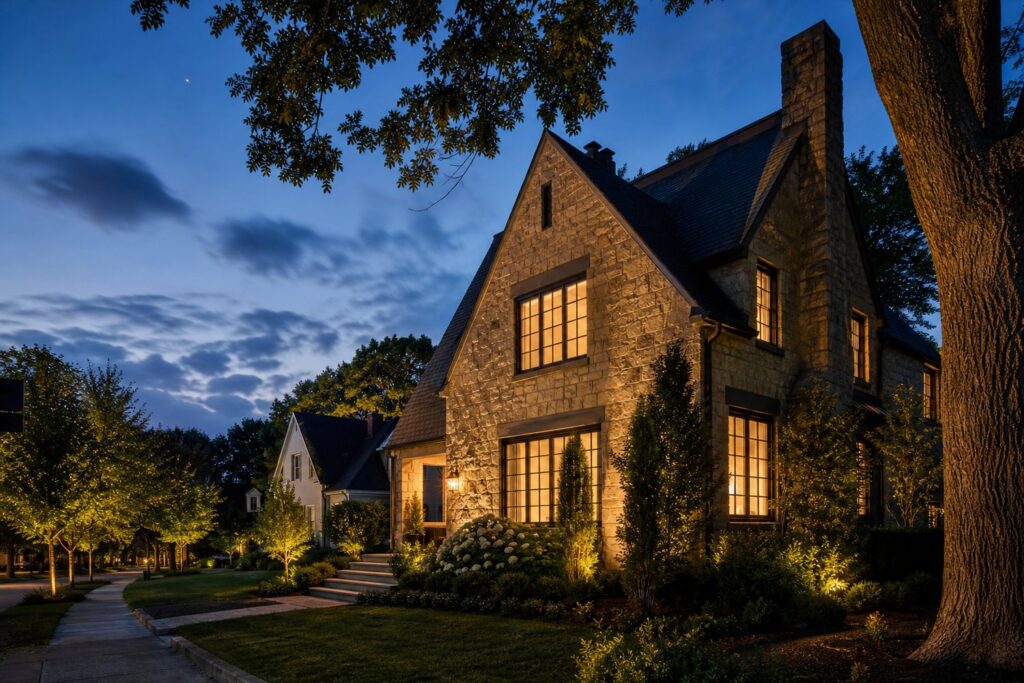
Start with the monthly payment you can carry and the cash cushion you want left after closing, then work backward to a down payment. That number may land well below 20 percent. Ask a lender to price two or three down payment levels side by side so you can compare payment, mortgage insurance, and cash needed.
How Much Should You Put Down on a Lexington-Area Home?
Put down the amount that keeps your monthly payment comfortable and still leaves real cash in the bank after closing. For a Lexington-area home, that is often less than 20 percent, because a bigger down payment lowers what you borrow but also drains the money you’ll need for repairs, moving, and surprises. The right answer comes from your budget, not from a rule of thumb.
Key Takeaways
- The median sale price for all home types sold in Lexington between August and October 2026 was $363,497, so the dollar amount of any down payment depends heavily on the price range you shop.
- There is no universal requirement to put 20 percent down; the real trade-off is borrowing cost versus the cash you keep for reserves and repairs.
- Kentucky Housing Corporation’s down payment assistance offers up to $12,500, but it is a repayable secondary loan (4.75% fixed over 15 years), not a grant.
- Lexington homes sold between August and October 2026 had a median of 14 days from listing to going under contract, so settle your down payment plan before you start touring.
- KHC assistance requires a KHC first mortgage, so confirm eligibility and program availability with a participating lender before you build a budget around it.
Do you need 20 percent down to buy a Lexington-area home?
No. Twenty percent is a common benchmark, mostly because it’s where conventional loans typically stop requiring private mortgage insurance, but it is not a rule for buying a home. Plenty of buyers close with less and keep a healthier cash cushion because of it.
In my experience, the buyers who get in trouble aren’t the ones who put down 5 or 10 percent. They’re the ones who emptied every account to hit a number and had nothing left when the water heater failed in month two.
What a larger down payment does for you
A larger down payment reduces the amount you borrow, which generally lowers your monthly payment and the interest you pay over time. It may also reduce or remove mortgage insurance, depending on your loan type. Those are real benefits, and for some buyers they’re worth it.
What a smaller down payment does for you
A smaller down payment preserves cash for repairs, reserves, moving costs, furnishings, and a stretch of reduced income. The trade-off is a larger loan, and on many loans, mortgage insurance. Mortgage insurance rules and pricing differ by loan type, credit profile, and down payment, so have your lender quote it rather than guessing.
| Approach | What it can do for you | What to watch |
|---|---|---|
| Larger down payment | Lower loan balance, often a lower monthly payment, possibly less or no mortgage insurance | Less cash left for repairs and emergencies |
| Smaller down payment | More cash kept in reserve, easier path to buying sooner | Higher loan balance, possible mortgage insurance, higher interest cost over time |
| Middle path | Enough down to keep the payment comfortable, enough cash left to handle the first year | Requires running real numbers with a lender before you shop |
What does the local market mean for your cash plan?
Recent local market data shows that Lexington homes (all home types) sold between August and October 2026 had a median sale price of $363,497, up 3.9% from $350,000 in the same window a year earlier. Those homes sold for an average of 98.1% of list price, with 14% selling above list and 60% below. Median time from listing to going under contract was 14 days.
Homes for sale now sit at 789 active listings, with about 3.1 months of supply, and 34% of listings have taken a price cut averaging 3.2%. That’s a market with room to negotiate on some homes and speed on others. Bluegrass REALTORS® also reported that September sales rose from a year earlier, and its monthly market statistics are the best place to follow price and inventory trends.
Price levels differ across Central Kentucky, and your down payment scales with the price you shop. These are area-level medians, and an individual home’s value depends on condition, street, build year, and timing.
| Area | Median Sale Price | Homes Sold |
|---|---|---|
| Lexington | $363,497 | 917 |
| Winchester | $241,832 | 54 |
| Georgetown | $349,657 | 167 |
| Versailles | $357,966 | 42 |
| Nicholasville | $331,970 | 147 |
| Richmond | $294,795 | 103 |
| Paris | $290,798 | 40 |
How do you pick a down payment that fits your budget?
Work backward from your monthly payment, not forward from a percentage. Here’s the order I’d use for any Lexington-area home purchase:
- Set your maximum monthly housing payment based on your income and your other debts, not on the biggest loan a lender will approve.
- Run several down payment scenarios instead of assuming 20 percent. Ask your lender for the payment, interest rate, and mortgage insurance at each level.
- Protect a separate cash reserve for repairs, maintenance, moving, furnishings, and any gap in income.
- Compare total cash needed at each level, including your down payment and closing costs, then see what’s left.
- Check any assistance carefully. Confirm whether it is repayable, deferred, forgivable, or secured by a second lien.
The purchase price is never the whole story. Whatever you put down, keep enough behind it that a surprise repair is an inconvenience instead of a crisis. If you want to see what a full cash picture looks like, my breakdown of how much cash you need to buy a house in Lexington covers the categories.
Should you put more down if you plan to stay a long time?
Maybe, but only after your reserves are covered. A longer stay gives a larger down payment more time to pay off through lower interest costs. It doesn’t change the fact that cash tied up in the house is hard to reach. If your reserves are thin, keeping cash usually beats squeezing out a slightly lower payment.
How do loan programs change the answer?
Loan type changes the minimum down payment, the mortgage insurance structure, and the interest rate you’re offered. Conventional, FHA, VA, and USDA loans each work differently, and some government-backed programs are designed to lower the down payment hurdle for eligible borrowers. Eligibility depends on your income, credit, the property, and your situation, so your lender confirms which programs you qualify for.
This is where I walk my clients through side-by-side comparisons before we tour homes. Moving fast in a market where the median home goes under contract in 14 days is much easier when your number is already set. When you’re ready to write offers, my post on how to offer on a Lexington home without overpaying picks up where this one leaves off.
What down payment help does Kentucky offer?
Kentucky Housing Corporation (KHC) offers down payment assistance of up to $12,500 toward down payment and closing costs. It is a secondary loan repayable over 15 years, not automatically a grant. KHC states that its temporarily increased assistance is repayable at a 4.75% fixed interest rate amortized over 15 years.
That repayment is an extra obligation on top of your first mortgage. It can still be a smart tool if it lets you buy while keeping your reserves intact, but count it as debt in your budget.
What should you check before counting on assistance?
- A KHC first mortgage is required. KHC’s program guide says borrowers must get a KHC first mortgage to qualify for its regular down payment assistance funds. You can’t attach it to any loan from any lender.
- Eligibility rules are program-specific. Income, credit, occupancy, and purchase-price requirements are published on KHC’s eligibility page, and they apply to KHC mortgage products, not to every conventional, FHA, VA, or USDA borrower.
- Limits change. KHC has updated income limits for some products, and for detailed lending rules it directs users to AllRegs through its tools and resources page. Recheck before you make an offer.
- Availability isn’t guaranteed. The $12,500 figure is the stated maximum, not what every buyer receives. Confirm current availability with a participating lender or KHC.
If you’re also thinking about timing, my post on what happens after your Lexington offer is accepted shows where lender and assistance paperwork fits in.
FAQ
Do I really need 20% down to buy a home near Lexington?
No, 20 percent is a benchmark, not a requirement. Many loan programs allow less, though a smaller down payment can mean mortgage insurance and a larger loan balance. Ask your lender to price several down payment levels so you can compare the payment and the cash you’d have left.
Is it better to put more money down or keep cash for repairs and emergencies?
For most buyers, protecting a cash reserve comes first. A larger down payment can lower your payment and borrowing cost, but cash tied up in the house is hard to access when a repair or income gap hits. The right split depends on your budget, loan pricing, and how stable your income is.
Does a larger down payment lower my monthly mortgage payment, and how does putting down less than 20% affect mortgage insurance?
A larger down payment generally lowers your payment because you borrow less. Putting down less than 20 percent on a conventional loan commonly brings private mortgage insurance, and other loan types have their own mortgage insurance rules. The cost depends on your credit, loan type, and down payment, so get a written quote at each level.
What down payment assistance is available to Kentucky homebuyers in 2026?
Kentucky Housing Corporation offers up to $12,500 toward down payment and closing costs. It’s a secondary loan repayable over 15 years at a 4.75% fixed rate, not a grant. Eligibility, income limits, and purchase-price limits apply, so confirm current terms with KHC or a participating lender.
Can I use Kentucky Housing Corporation assistance with an FHA, VA, USDA, or conventional loan?
KHC’s regular down payment assistance is tied to a KHC first mortgage, so it isn’t something you can add to any loan from any lender. Which KHC loan products fit your situation depends on your eligibility. A participating lender can tell you what’s available to you right now.
Where to go from here
The best down payment is the one that keeps your monthly payment comfortable and your savings intact, and that number is different for every buyer. If you’re buying a Lexington-area home, I’ll help you compare the scenarios, connect you with lenders who work with Kentucky programs, and make sure the plan holds up before you make an offer. Your real estate attorney will handle the closing itself, and I’ll make sure you’ve seen your numbers well before then. Schedule a consultation and we’ll build your budget together, with no pressure.
About Carlos Elliott
Carlos Elliott is a top 1% REALTOR® with Tru Life Real Estate serving Lexington and Central Kentucky, where he has closed 221+ transactions and earned 123+ five-star reviews. Bilingual in English and Spanish, he helps buyers, sellers, and investors move with honest advice and deep local market knowledge.
Tru Life Real Estate · (859) 361-2709
Equal Housing Opportunity. Tru Life Real Estate is regulated by the Kentucky Real Estate Commission. This article is general information, not legal, tax, or financial advice; confirm your own numbers with your real estate attorney, tax advisor, or lender.
Start with the monthly payment you can carry and the cash cushion you want left after closing, then work backward to a down payment. That number may land well below 20 percent. Ask a lender to price two or three down payment levels side by side so you can compare payment, mortgage insurance, and cash needed.
How Much Should You Put Down on a Lexington-Area Home?
Put down the amount that keeps your monthly payment comfortable and still leaves real cash in the bank after closing. For a Lexington-area home, that is often less than 20 percent, because a bigger down payment lowers what you borrow but also drains the money you’ll need for repairs, moving, and surprises. The right answer comes from your budget, not from a rule of thumb.
Key Takeaways
- The median sale price for all home types sold in Lexington between August and October 2026 was $363,497, so the dollar amount of any down payment depends heavily on the price range you shop.
- There is no universal requirement to put 20 percent down; the real trade-off is borrowing cost versus the cash you keep for reserves and repairs.
- Kentucky Housing Corporation’s down payment assistance offers up to $12,500, but it is a repayable secondary loan (4.75% fixed over 15 years), not a grant.
- Lexington homes sold between August and October 2026 had a median of 14 days from listing to going under contract, so settle your down payment plan before you start touring.
- KHC assistance requires a KHC first mortgage, so confirm eligibility and program availability with a participating lender before you build a budget around it.
Do you need 20 percent down to buy a Lexington-area home?
No. Twenty percent is a common benchmark, mostly because it’s where conventional loans typically stop requiring private mortgage insurance, but it is not a rule for buying a home. Plenty of buyers close with less and keep a healthier cash cushion because of it.
In my experience, the buyers who get in trouble aren’t the ones who put down 5 or 10 percent. They’re the ones who emptied every account to hit a number and had nothing left when the water heater failed in month two.
What a larger down payment does for you
A larger down payment reduces the amount you borrow, which generally lowers your monthly payment and the interest you pay over time. It may also reduce or remove mortgage insurance, depending on your loan type. Those are real benefits, and for some buyers they’re worth it.
What a smaller down payment does for you
A smaller down payment preserves cash for repairs, reserves, moving costs, furnishings, and a stretch of reduced income. The trade-off is a larger loan, and on many loans, mortgage insurance. Mortgage insurance rules and pricing differ by loan type, credit profile, and down payment, so have your lender quote it rather than guessing.
| Approach | What it can do for you | What to watch |
|---|---|---|
| Larger down payment | Lower loan balance, often a lower monthly payment, possibly less or no mortgage insurance | Less cash left for repairs and emergencies |
| Smaller down payment | More cash kept in reserve, easier path to buying sooner | Higher loan balance, possible mortgage insurance, higher interest cost over time |
| Middle path | Enough down to keep the payment comfortable, enough cash left to handle the first year | Requires running real numbers with a lender before you shop |
What does the local market mean for your cash plan?
Recent local market data shows that Lexington homes (all home types) sold between August and October 2026 had a median sale price of $363,497, up 3.9% from $350,000 in the same window a year earlier. Those homes sold for an average of 98.1% of list price, with 14% selling above list and 60% below. Median time from listing to going under contract was 14 days.
Homes for sale now sit at 789 active listings, with about 3.1 months of supply, and 34% of listings have taken a price cut averaging 3.2%. That’s a market with room to negotiate on some homes and speed on others. Bluegrass REALTORS® also reported that September sales rose from a year earlier, and its monthly market statistics are the best place to follow price and inventory trends.
Price levels differ across Central Kentucky, and your down payment scales with the price you shop. These are area-level medians, and an individual home’s value depends on condition, street, build year, and timing.
| Area | Median Sale Price | Homes Sold |
|---|---|---|
| Lexington | $363,497 | 917 |
| Winchester | $241,832 | 54 |
| Georgetown | $349,657 | 167 |
| Versailles | $357,966 | 42 |
| Nicholasville | $331,970 | 147 |
| Richmond | $294,795 | 103 |
| Paris | $290,798 | 40 |
How do you pick a down payment that fits your budget?
Work backward from your monthly payment, not forward from a percentage. Here’s the order I’d use for any Lexington-area home purchase:
- Set your maximum monthly housing payment based on your income and your other debts, not on the biggest loan a lender will approve.
- Run several down payment scenarios instead of assuming 20 percent. Ask your lender for the payment, interest rate, and mortgage insurance at each level.
- Protect a separate cash reserve for repairs, maintenance, moving, furnishings, and any gap in income.
- Compare total cash needed at each level, including your down payment and closing costs, then see what’s left.
- Check any assistance carefully. Confirm whether it is repayable, deferred, forgivable, or secured by a second lien.
The purchase price is never the whole story. Whatever you put down, keep enough behind it that a surprise repair is an inconvenience instead of a crisis. If you want to see what a full cash picture looks like, my breakdown of how much cash you need to buy a house in Lexington covers the categories.
Should you put more down if you plan to stay a long time?
Maybe, but only after your reserves are covered. A longer stay gives a larger down payment more time to pay off through lower interest costs. It doesn’t change the fact that cash tied up in the house is hard to reach. If your reserves are thin, keeping cash usually beats squeezing out a slightly lower payment.
How do loan programs change the answer?
Loan type changes the minimum down payment, the mortgage insurance structure, and the interest rate you’re offered. Conventional, FHA, VA, and USDA loans each work differently, and some government-backed programs are designed to lower the down payment hurdle for eligible borrowers. Eligibility depends on your income, credit, the property, and your situation, so your lender confirms which programs you qualify for.
This is where I walk my clients through side-by-side comparisons before we tour homes. Moving fast in a market where the median home goes under contract in 14 days is much easier when your number is already set. When you’re ready to write offers, my post on how to offer on a Lexington home without overpaying picks up where this one leaves off.
What down payment help does Kentucky offer?
Kentucky Housing Corporation (KHC) offers down payment assistance of up to $12,500 toward down payment and closing costs. It is a secondary loan repayable over 15 years, not automatically a grant. KHC states that its temporarily increased assistance is repayable at a 4.75% fixed interest rate amortized over 15 years.
That repayment is an extra obligation on top of your first mortgage. It can still be a smart tool if it lets you buy while keeping your reserves intact, but count it as debt in your budget.
What should you check before counting on assistance?
- A KHC first mortgage is required. KHC’s program guide says borrowers must get a KHC first mortgage to qualify for its regular down payment assistance funds. You can’t attach it to any loan from any lender.
- Eligibility rules are program-specific. Income, credit, occupancy, and purchase-price requirements are published on KHC’s eligibility page, and they apply to KHC mortgage products, not to every conventional, FHA, VA, or USDA borrower.
- Limits change. KHC has updated income limits for some products, and for detailed lending rules it directs users to AllRegs through its tools and resources page. Recheck before you make an offer.
- Availability isn’t guaranteed. The $12,500 figure is the stated maximum, not what every buyer receives. Confirm current availability with a participating lender or KHC.
If you’re also thinking about timing, my post on what happens after your Lexington offer is accepted shows where lender and assistance paperwork fits in.
FAQ
Do I really need 20% down to buy a home near Lexington?
No, 20 percent is a benchmark, not a requirement. Many loan programs allow less, though a smaller down payment can mean mortgage insurance and a larger loan balance. Ask your lender to price several down payment levels so you can compare the payment and the cash you’d have left.
Is it better to put more money down or keep cash for repairs and emergencies?
For most buyers, protecting a cash reserve comes first. A larger down payment can lower your payment and borrowing cost, but cash tied up in the house is hard to access when a repair or income gap hits. The right split depends on your budget, loan pricing, and how stable your income is.
Does a larger down payment lower my monthly mortgage payment, and how does putting down less than 20% affect mortgage insurance?
A larger down payment generally lowers your payment because you borrow less. Putting down less than 20 percent on a conventional loan commonly brings private mortgage insurance, and other loan types have their own mortgage insurance rules. The cost depends on your credit, loan type, and down payment, so get a written quote at each level.
What down payment assistance is available to Kentucky homebuyers in 2026?
Kentucky Housing Corporation offers up to $12,500 toward down payment and closing costs. It’s a secondary loan repayable over 15 years at a 4.75% fixed rate, not a grant. Eligibility, income limits, and purchase-price limits apply, so confirm current terms with KHC or a participating lender.
Can I use Kentucky Housing Corporation assistance with an FHA, VA, USDA, or conventional loan?
KHC’s regular down payment assistance is tied to a KHC first mortgage, so it isn’t something you can add to any loan from any lender. Which KHC loan products fit your situation depends on your eligibility. A participating lender can tell you what’s available to you right now.
Where to go from here
The best down payment is the one that keeps your monthly payment comfortable and your savings intact, and that number is different for every buyer. If you’re buying a Lexington-area home, I’ll help you compare the scenarios, connect you with lenders who work with Kentucky programs, and make sure the plan holds up before you make an offer. Your real estate attorney will handle the closing itself, and I’ll make sure you’ve seen your numbers well before then. Schedule a consultation and we’ll build your budget together, with no pressure.
Equal Housing Opportunity. Tru Life Real Estate is regulated by the Kentucky Real Estate Commission. This article is general information, not legal, tax, or financial advice; confirm your own numbers with your real estate attorney, tax advisor, or lender.
